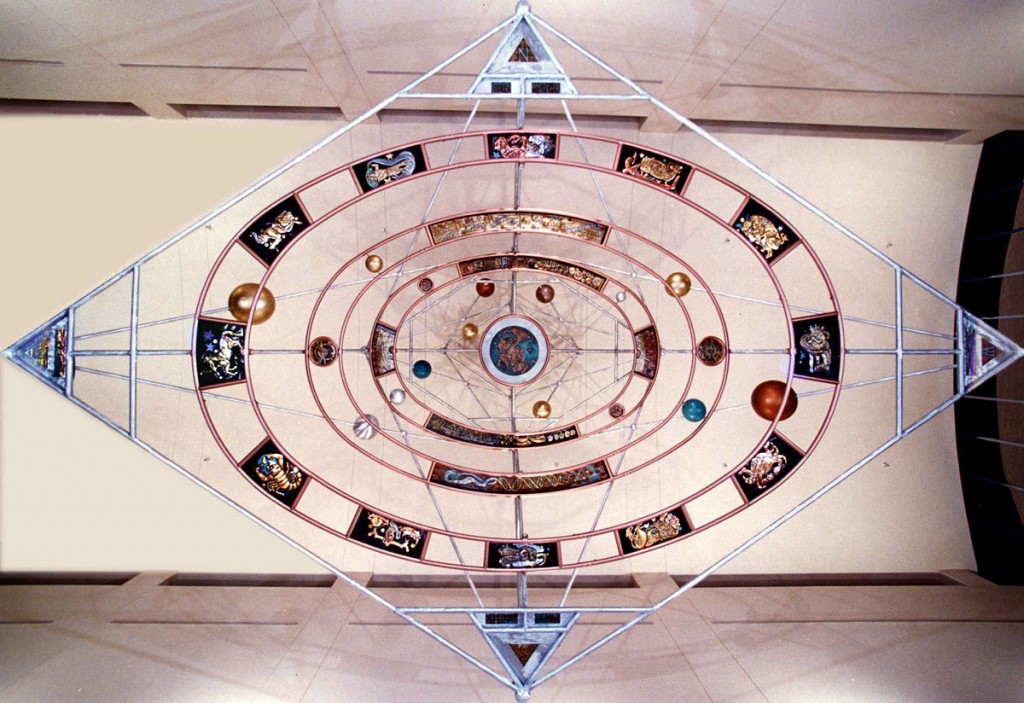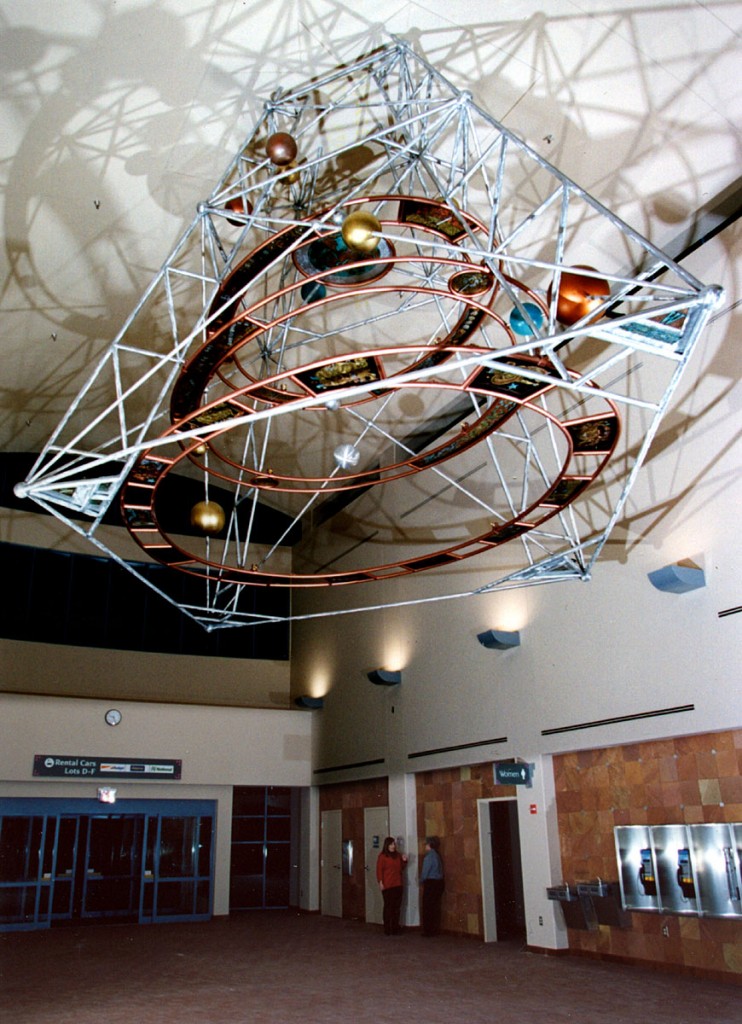
 Global Positioner “Global Positioner” 30 ft. x 20 ft x 18 ft. Car Rental Facility, Albuquerque, New Mexico, International Airport, 2001. City of Albuquerque % for Art 2001.
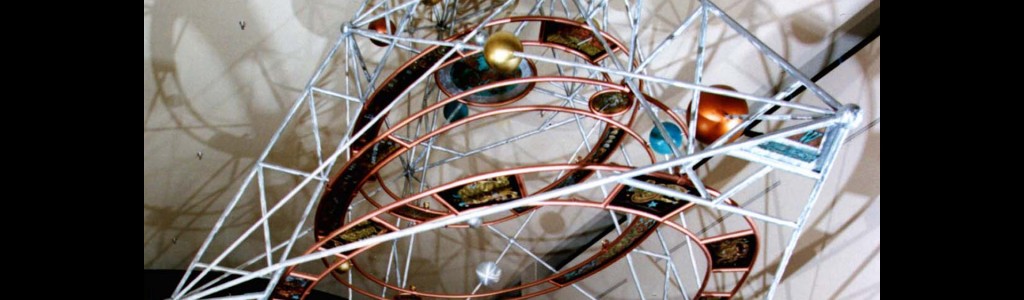
The work mimics a huge astronomical instrument to help the viewer position themselves in the universe. In the center is a map of "Pangaea," the ancient land mass, just as it is beginning to split and move apart to form the continents.
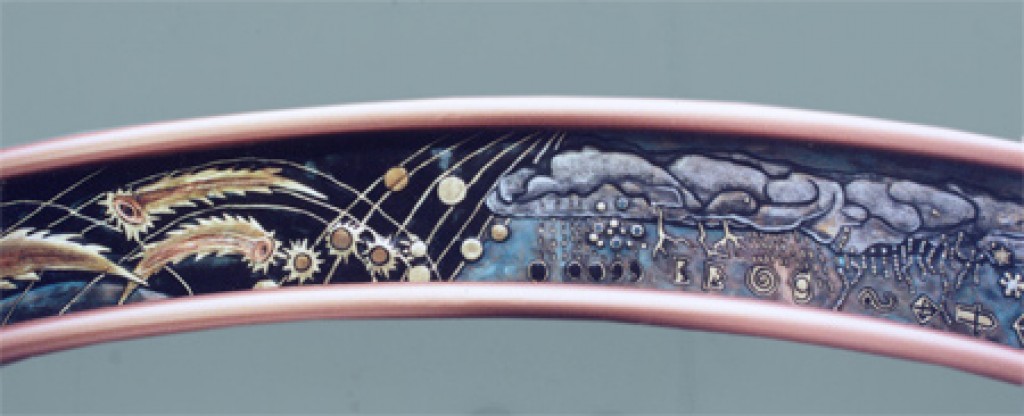
Small circle: On one long side are all the gears and computer parts that run the instrument. On the other side is a chart of phases of the moon, paths of comets and different weather systems. The signs beneath are the international weather symbols. The two faces represent the winds. At each end are two quadrants, one of earliest devices for measuring angles, usually of a star above the horizon...
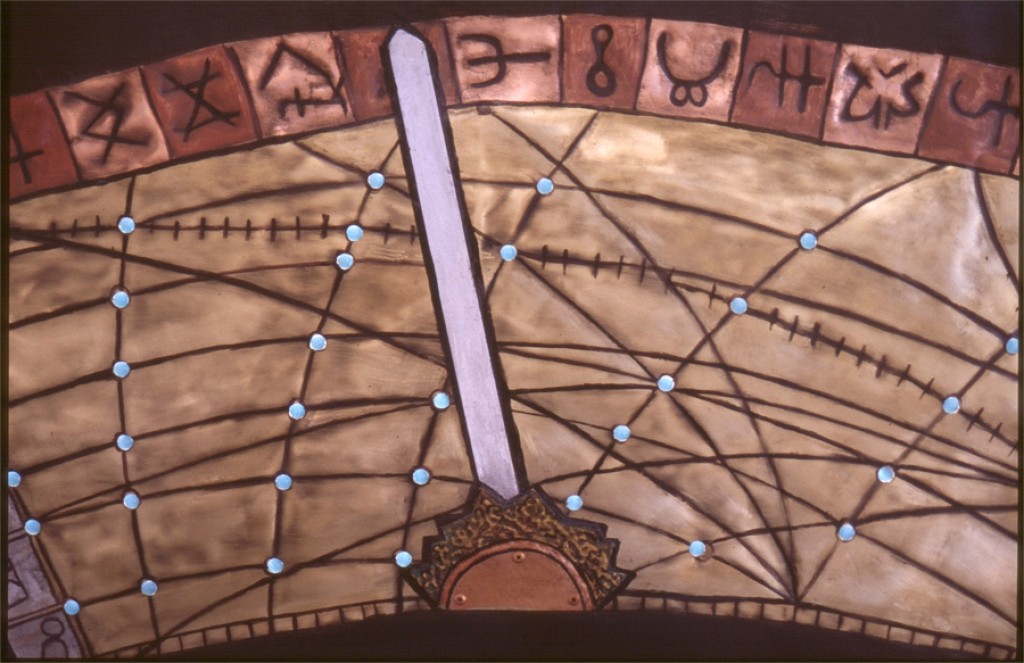
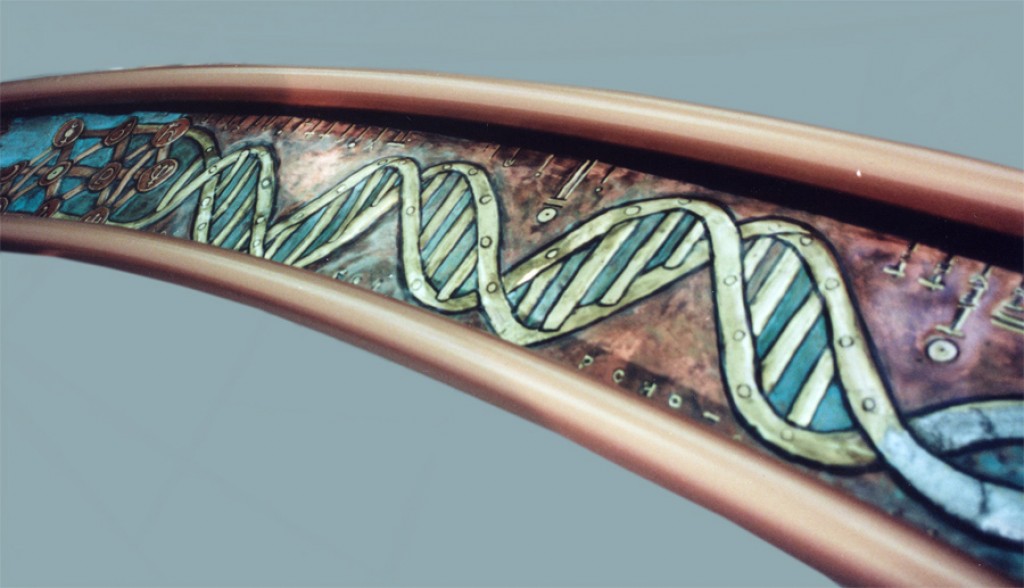
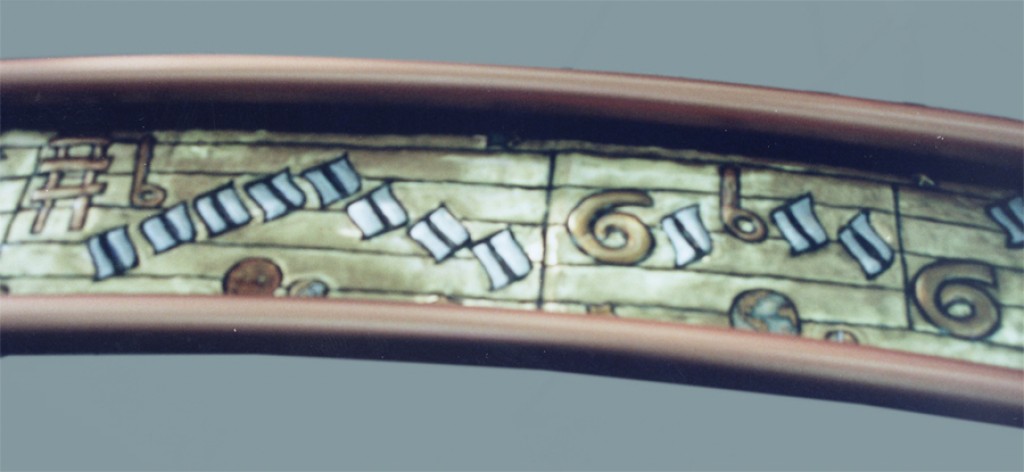
Middle circle: On one long side is Johannes Kepler's, "music of the spheres." Kepler believed that each planet had it own musical cord that explained their changing speeds in orbit. of the On the other side is a chart to read the amount of life in the universe. It starts with a Kabalistic representation of the planets goes on to the DNA and at last becomes a life form. At both ends are Astrolabes. They were mathematical models of the universe. They were one of the earliest forms of computer used to solve astronomical problems and show the positions of stars and planets at different times dates and latitudes.
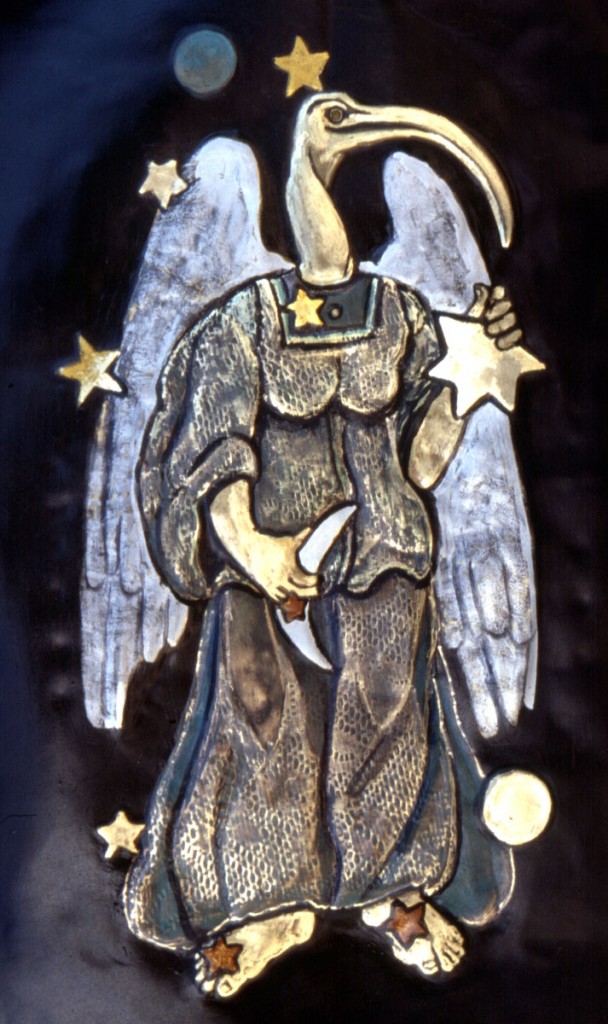
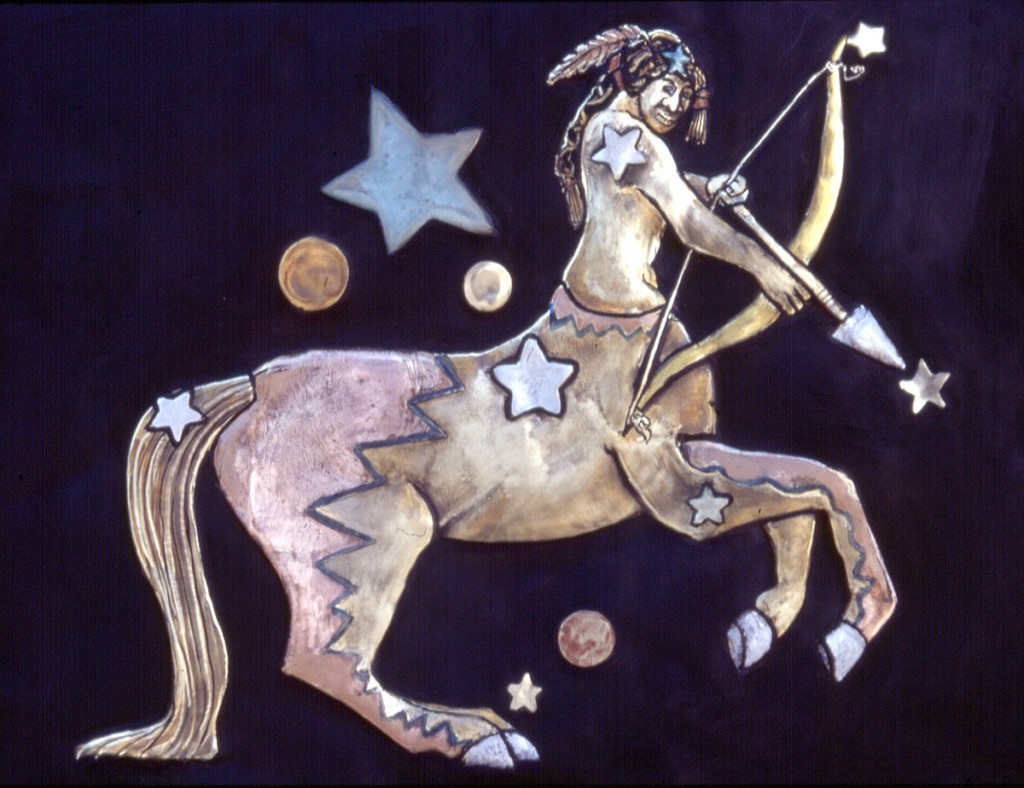
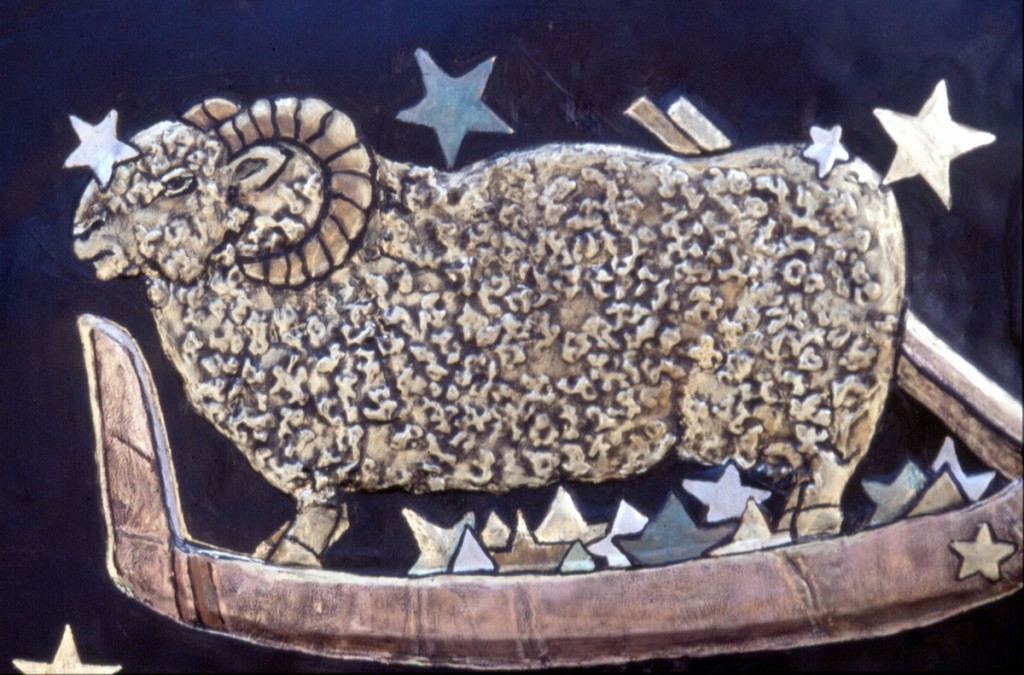
Large Circle: shows the twelve signs of the Zodiac. The four triangles at the bottom point to the four directions. To the east are the Sandia Mountains and to the west is the Rio Grande River.
|